Do I need to be good at art to benefit from art therapy?
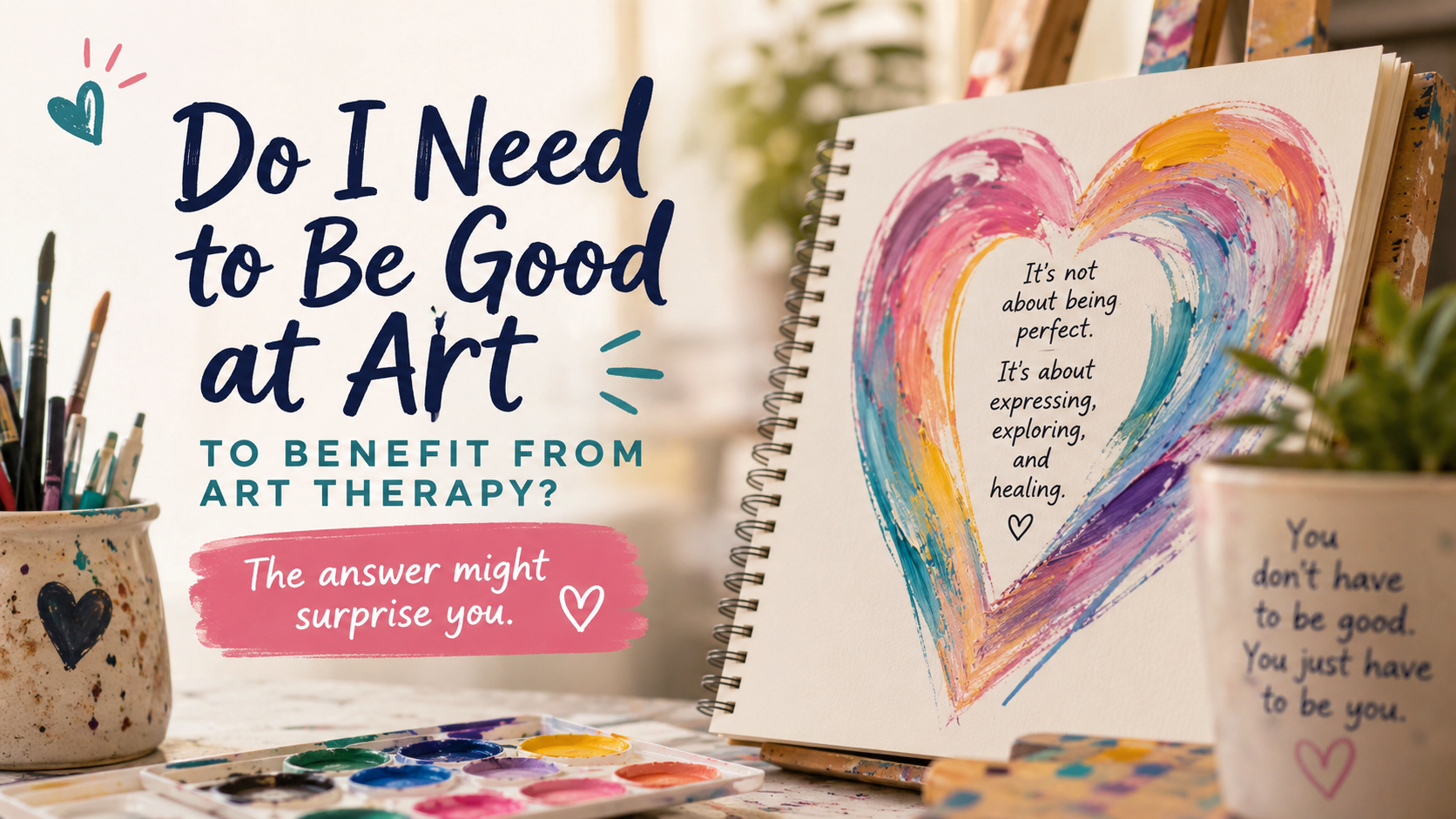
I'm often asked, “I’m not an artist, do I need to be one to do art therapy?” The answer is no. It’s not about creating pretty pictures; it's about the process, it's about being present in the moment and expressing yourself visually when words don't work.
When I'm demonstrating concepts and methods for making art to help process feelings and emotions, I often use stick figures and shapes like squares, circles, and triangles to suggest different ways of being. Making a representational product is not the primary focus or goal in art therapy. The purpose is to engage in the art-making process and allow our bodies and brains to integrate thoughts and feelings.
In today's blog entry, I'm discussing how to take art therapy to the park. This is often called eco art therapy; it combines nature's calming sensory environment with creative expression to reduce stress, improve mental health, and foster mindfulness. My trip to the park was restful, peaceful, and restorative. It helped me ground myself by looking at objects around me and at the beauty of nature, and it engaged all my senses.
Some of the activities I engaged in included gathering items that had fallen to the ground, such as sticks, leaves, and rocks. I was not worried about how they would fit together in the end. I was just enjoying how they felt, how they smelled, and all the different colors.
When I first arrived at Oxbow Park, I noticed the bird song.
Looking up into the trees to find the bird, which I didn't find, I noticed how dark blue the sky looked against the shining green leaves of the trees. This gave me a sense of awe. An important emotion for well-being.
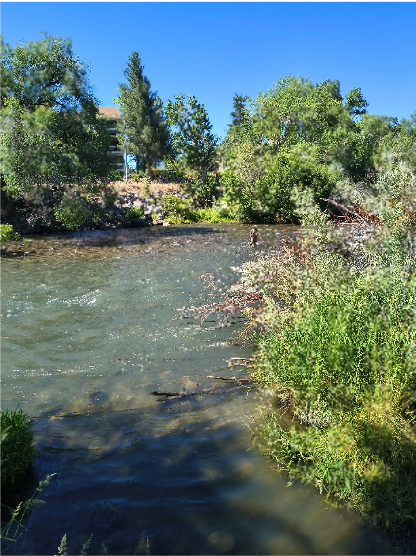
After enjoying this for about 5 minutes. I walked over to a lookout point at the river’s edge. The rushing water, the trees lining the banks, a person in the middle of the river, and fly fishing. Just watching his rhythmic movements was very peaceful.
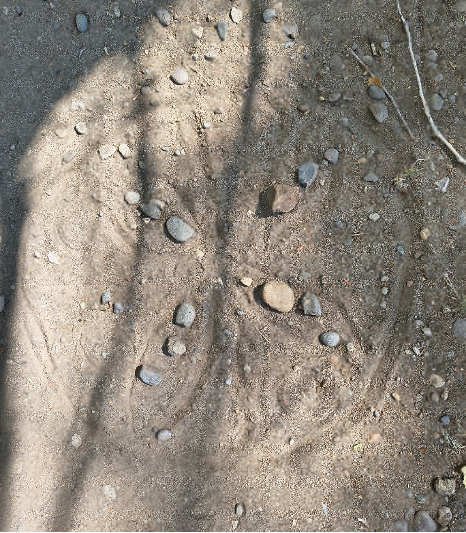
After that, I started meandering along the paths picking up falling objects. One of these was a long stick that had fallen to the ground. I decided to use it along with some rocks to create a dirt rock mandala.
You don't need to bring art materials when you go out into nature. Nature provides everything you need to create art, and if you need to take it with you, take a picture. I like to leave the natural world as it is. What we take away with us from these things is the peace and relaxation we experience during the art-making process in nature.
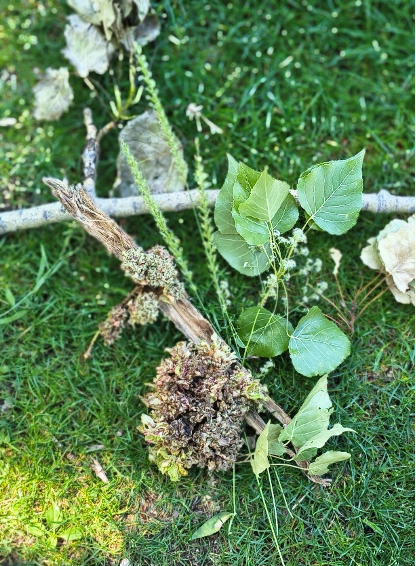
After gathering fallen leaves and abundant flowers, I made a small assemblage with them, thinking about how nature puts everything together beautifully without any help. As I was laying everything down, I was feeling the textures, inhaling the aromas, seeing the different shapes, and allowing them to show me how to put it all together.
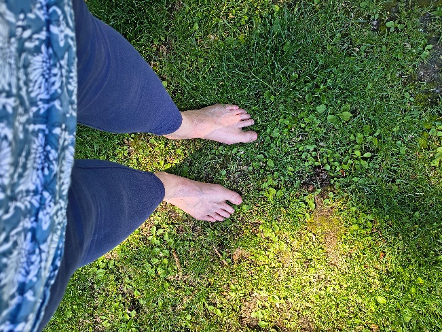
Although this is not the next part in an art process, it is about me because I do it, connected to the earth. I slipped off my sandals and walked around on the grass barefoot for about 10 minutes. The sensation was delicious.
We need to remember that we are part of nature, and walking on cement doesn't really help us connect this much. Walking barefoot on grass has been shown to reduce stress levels and give a greater sense of well-being.
I'm going to encourage you to try to find time this summer to schedule a morning to go to a park, walk on the grass barefoot, look up at the sky through the trees, and listen to the birds singing. Make a leaf mandala or rock mandala and leave it for someone else to see and enjoy.
Art therapy is a mental health profession that enriches the lives of individuals, families, and communities through active art-making, creative processes, applied psychological theory, and human experience within a psychotherapeutic relationship.
Art therapists are credentialed mental health professionals. They are trained in a broad range of psychological theories and ways to use art media and creative processes to help people cope with mental health challenges. Art therapists hold Master ‘s–level or higher degrees. Look for a therapist with the credentials ATR (Art Therapist Registered) or ATR–BC (Board–Certified Art Therapist Registered).
If you feel that art therapy would benefit you, contact Paulette Gill at Art Therapy Studio of Reno at 775-741-0221 or visit our website at https://www.arttherapystudioofreno.com/